Source-linked reading guide · Region and theme hub
Flowers and Alpine Plants
花と高山植物
Above the treeline, Japan's alpine parks compress spring into a few summer weeks: snow melts in June and, in quick succession, whole slopes flower. Daisetsuzan is the greatest flower park in the country, Hakusan one of the richest, and the Japan Alps — Chubu-Sangaku and Minami Alps — carry flower fields between their huts. Two island and lowland exceptions belong in the same hub: Rebun Island, where alpine species bloom at sea level in the cool northern air, and Mount Apoi in the Hidaka park, whose serpentine soil grows plants found nowhere else. Lower down, the azalea volcanoes — Aso Kuju, Unzen and Kirishima — turn whole mountainsides pink in May and June, and Oze's marsh flowers (skunk cabbage, then day lilies) draw walkers all summer. This hub is compiled from the full park guides in this collection; each park guide carries its own summary table, access section and sources.
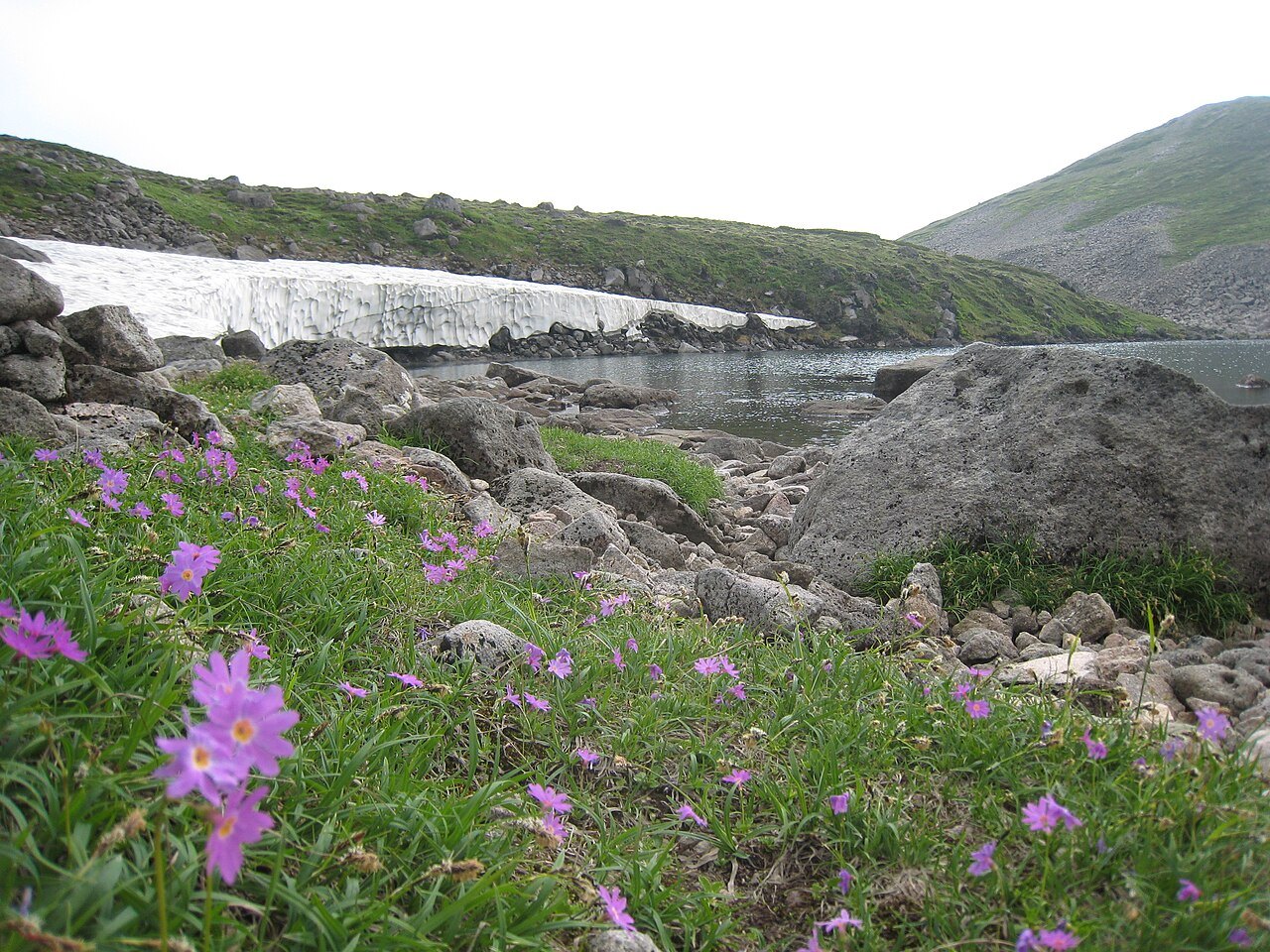
Flowers and alpine plants across the parks
Above the treeline, Japan's alpine parks compress spring into a few summer weeks: snow melts in June and, in quick succession, whole slopes flower. Daisetsuzan is the greatest flower park in the country, Hakusan one of the richest, and the Japan Alps — Chubu-Sangaku and Minami Alps — carry flower fields between their huts. Two island and lowland exceptions belong in the same hub: Rebun Island, where alpine species bloom at sea level in the cool northern air, and Mount Apoi in the Hidaka park, whose serpentine soil grows plants found nowhere else. Lower down, the azalea volcanoes — Aso Kuju, Unzen and Kirishima — turn whole mountainsides pink in May and June, and Oze's marsh flowers (skunk cabbage, then day lilies) draw walkers all summer.
The parks in this hub
Daisetsuzan National Park — Hokkaido's largest national park: the Daisetsuzan volcanic group, Mount Asahi (2,291 m), alpine flower fields and the Sounkyo gorge. Best season: Late June to early October for alpine flowers and autumn colour. Gateway: Asahikawa — ropeway trailheads about 1–1.5 h by bus.
Rishiri-Rebun-Sarobetsu National Park — Mount Rishiri (1,721 m) rising from the sea; Rebun Island alpine flower fields; Sarobetsu coastal plain. Best season: June to September for flowers; Rishiri climbing July–September. Gateway: Wakkanai — ferry about 1 h 40 min to Rishiri, about 1 h 55 min to Rebun.
Hidakasanmyaku-Erimo-Tokachi National Park — The Hidaka mountain range, Japan's largest land national park; Mount Poroshiri (2,052 m) and Mount Apoi; Cape Erimo and its wind-swept coast. Best season: June to October for alpine trails; Cape Erimo year-round (very windy). Gateway: Obihiro / Samani — buses serve Erimo; trailheads by car.
Oze National Park — Ozegahara marshland boardwalks; Mount Hiuchigatake and Mount Shibutsu; skunk-cabbage and day-lily seasons. Best season: Late May to October; skunk cabbage late May–June, day lilies July. Gateway: Numata / Aizukogen — bus about 1.5–2 h to trailheads (Hatomachitoge, Oshimizu, Fujimi-toge).
Chubu-Sangaku National Park — Northern Japan Alps: Kamikochi valley, Mount Tate and Kurobe, the Hotaka range and Mount Norikura. Best season: May to November for Kamikochi; alpine season July–September. Gateway: Matsumoto — bus about 1.5 h to Kamikochi; Toyama for Tateyama.
Minami Alps National Park — The Southern Alps: Mount Kita (3,193 m, Japan's second highest), Mount Aino and Mount Senjo; a chain of 3,000 m peaks and alpine flower fields. Best season: Alpine season late June to October; flower fields July. Gateway: Kofu — seasonal buses about 2 h to Hirogawara trailhead.
Hakusan National Park — Sacred Mount Hakusan (2,702 m) with its crater ponds; some of Japan's richest alpine flower fields; deep beech forests and heavy-snow gorges. Best season: Alpine season July to October; flower fields July to August. Gateway: Kanazawa — bus about 1 h 30 min to Ichinose trailhead side.
Jōshin'etsu-kōgen National Park — Volcanic highlands: active Mount Asama and Mount Kusatsu-Shirane with its Yugama crater lake; Shiga Kogen plateau; Mount Tanigawa and Mount Naeba; Jigokudani snow monkeys. Best season: Year-round; skiing December to April, highland flowers June to September, autumn colour October. Gateway: Karuizawa / Nagano — Shinkansen gateways, buses to the highlands.
Choosing within this theme
Timing is everything: azaleas in May–June, Rebun and Apoi in June, Oze's day lilies in July, and the high alpine fields from mid-July to August. Daisetsuzan and Hakusan are the connoisseur's choices; Kamikochi in Chubu-Sangaku is the most accessible flower valley; and Oze needs no climbing at all — just boardwalks and an early start to beat the crowds.
Also in this theme
These parks in the collection also belong to this theme: Aso Kuju National Park (One of the world's largest calderas at Aso with the active Nakadake crater); Unzen-Amakusa National Park (Mount Unzen and the 1990-95 Fugendake eruption zone); Kirishima-Kinkōwan National Park (The Kirishima volcanic group: Mount Karakuri (Karakunidake, 1,700 m) and Takachiho-no-mine with its crater lakes). Open any park from the main list to read its full guide.
At a glance
| Parks covered | 11 in this theme — featured: Daisetsuzan, Rishiri-Rebun-Sarobetsu, Hidakasanmyaku-Erimo-Tokachi, Oze, Chubu-Sangaku, Minami Alps, Hakusan, Jōshin'etsu-kōgen |
|---|---|
| Signature landscapes | Hokkaido's largest national park: the Daisetsuzan volcanic group, Mount Asahi (2,291 m), alpine flower fields and the Sounkyo gorge; Mount Rishiri (1,721 m) rising from the sea; The Hidaka mountain range, Japan's largest land national park; Ozegahara marshland boardwalks; Northern Japan Alps: Kamikochi valley, Mount Tate and Kurobe, the Hotaka range and Mount Norikura; The Southern Alps: Mount Kita (3,193 m, Japan's second highest), Mount Aino and Mount Senjo; Sacred Mount Hakusan (2,702 m) with its crater ponds; Volcanic highlands: active Mount Asama and Mount Kusatsu-Shirane with its Yugama crater lake |
| Best season | Azaleas May–June; low alpine June–July; high alpine fields mid-July to August |
| Main gateways | Asahikawa — ropeway trailheads about 1–1.5 h by bus; Wakkanai — ferry about 1 h 40 min to Rishiri, about 1 h 55 min to Rebun; Obihiro / Samani — buses serve Erimo; trailheads by car; Numata / Aizukogen — bus about 1.5–2 h to trailheads (Hatomachitoge, Oshimizu, Fujimi-toge); Matsumoto — bus about 1.5 h to Kamikochi; Toyama for Tateyama; Kofu — seasonal buses about 2 h to Hirogawara trailhead; Kanazawa — bus about 1 h 30 min to Ichinose trailhead side; Karuizawa / Nagano — Shinkansen gateways, buses to the highlands |
| Best for | Timing is everything: azaleas in May–June, Rebun and Apoi in June, Oze's day lilies in July, and the high alpine fields from mid-July to August. |